
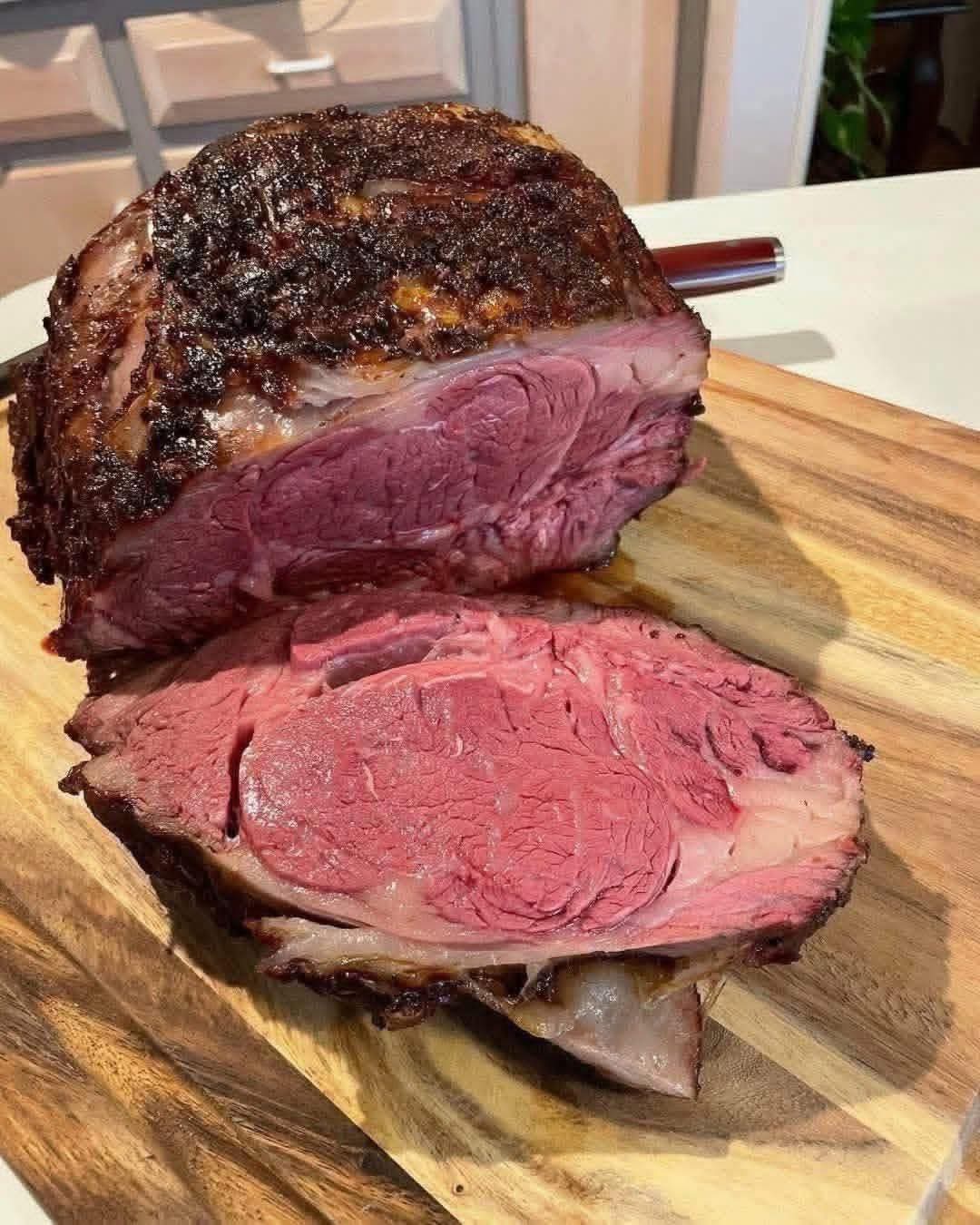
Prime Rib Roast Recipe (Perfectly Juicy & Tender)
Description
Prime Rib is a timeless and elegant beef roast known for its incredible tenderness, rich beefy flavor, and juicy texture. Often served during holidays, celebrations, or special family dinners, this classic roast is slow-cooked to perfection and finished with a high-temperature blast that creates a beautifully browned crust while keeping the inside moist and flavorful.
This prime rib roast recipe is simple, reliable, and delivers restaurant-quality results at home. With minimal ingredients and the right cooking technique, you’ll get a perfectly cooked prime rib every single time.
Why You’ll Love This Prime Rib Recipe
- Juicy, tender, and full of flavor
- Perfect for holidays and special occasions
- Simple seasoning lets the beef shine
- Foolproof cooking method
- Impressive centerpiece for any dinner table
Ingredients
- 1 prime rib roast (5–6 pounds, bone-in or boneless)
- 2 tablespoons olive oil or softened butter
- 4 cloves garlic, minced
- 2 teaspoons salt (or to taste)
- 1½ teaspoons black pepper
- 1 tablespoon fresh rosemary, chopped
- 1 tablespoon fresh thyme, chopped
- 1 teaspoon onion powder (optional)
How to Make Prime Rib Roast
Step 1: Bring the Prime Rib to Room Temperature
Remove the prime rib from the refrigerator 2–3 hours before cooking. Letting the meat come to room temperature ensures even cooking and a juicy interior.
Pat the roast dry with paper towels to help the seasoning stick and promote browning.
Step 2: Preheat the Oven
Preheat your oven to 450°F (230°C). This high heat will be used first to create a flavorful crust.
Step 3: Season the Prime Rib
In a small bowl, mix together olive oil (or butter), garlic, salt, black pepper, rosemary, thyme, and onion powder.
Rub the seasoning mixture generously all over the prime rib, making sure to coat every side. This herb and garlic rub enhances the natural flavor of the beef without overpowering it.
Step 4: Roast at High Heat
Place the prime rib fat-side up on a rack inside a roasting pan. This allows heat to circulate evenly and keeps the roast juicy.
Roast uncovered at 450°F (230°C) for 20 minutes to develop a beautiful crust.
Step 5: Slow Roast to Perfection
After 20 minutes, reduce the oven temperature to 325°F (165°C) and continue roasting.
Cook for about 15–17 minutes per pound for medium-rare. Use a meat thermometer for accuracy:
- Rare: 120–125°F (49–52°C)
- Medium-rare: 130–135°F (54–57°C)
- Medium: 140–145°F (60–63°C)
Step 6: Rest the Roast
Once the prime rib reaches your desired internal temperature, remove it from the oven and tent loosely with foil.
Let it rest for 20–30 minutes. Resting allows the juices to redistribute, resulting in a tender and juicy roast.
Step 7: Slice and Serve
Slice the prime rib against the grain and serve warm. Pair it with roasted vegetables, mashed potatoes, or au jus for a classic presentation.
Tips for the Best Prime Rib
- Always use a meat thermometer for perfect doneness
- Bone-in prime rib has more flavor, but boneless is easier to slice
- Don’t skip resting time—it’s essential for juicy meat
- Season generously; prime rib is a thick cut
What to Serve with Prime Rib
- Garlic mashed potatoes
- Roasted carrots or asparagus
- Creamed spinach
- Yorkshire pudding
- Horseradish sauce or beef au jus
Storage and Reheating
- Store leftovers in an airtight container in the refrigerator for up to 4 days
- Reheat gently in the oven at 300°F (150°C) with foil to prevent drying
- Leftover prime rib makes excellent sandwiches or steak salads
Frequently Asked Questions
Is prime rib the same as ribeye?
Prime rib comes from the rib section, while ribeye steaks are sliced from the same area. Prime rib is roasted whole, while ribeye is grilled or pan-seared.
Do I need to baste prime rib?
No. Prime rib naturally bastes itself due to its fat content.
Can I make prime rib ahead of time?
Prime rib is best served fresh, but leftovers reheat well if done gently.