
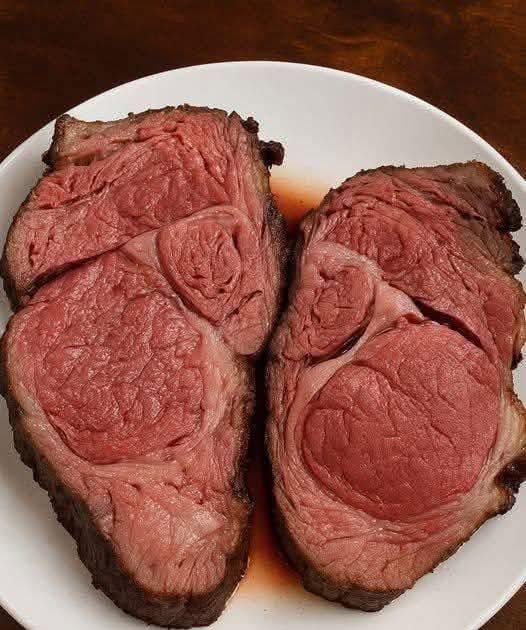
Perfect Medium-Rare Prime Rib (Juicy, Tender, and Foolproof)
A perfectly cooked medium-rare prime rib is the ultimate show-stopping roast—rich, juicy, and incredibly flavorful. With a beautifully browned crust on the outside and a warm pink center on the inside, this classic prime rib recipe is ideal for holidays, special occasions, or anytime you want to impress.
This method uses a high-heat sear followed by slow roasting, ensuring even cooking and maximum tenderness every single time.
Cooking Time & Yield
- Prep Time: 15 minutes
- Resting Time (before cooking): 2 hours
- Cooking Time: 1½–2 hours (depending on size)
- Resting Time (after cooking): 20–30 minutes
- Total Time: ~4 hours
- Servings: 6–8 people
Ingredients
For the Prime Rib
- 1 prime rib roast (4–6 lb / 1.8–2.7 kg)
- 2 tablespoons olive oil
- 2 tablespoons kosher salt
- 1 tablespoon freshly ground black pepper
- 1 tablespoon garlic powder
- 1 tablespoon fresh rosemary, finely chopped
- 1 tablespoon fresh thyme, finely chopped
- 4 cloves garlic, minced
Step-by-Step Instructions
1 Bring the Prime Rib to Room Temperature
Remove the prime rib roast from the refrigerator at least 2 hours before cooking.
This step is crucial. Allowing the meat to come to room temperature ensures:
- Even cooking from edge to center
- A perfectly pink interior
- No cold center after roasting
Place the roast on a tray or plate and leave it uncovered.
2 Preheat the Oven
Preheat your oven to 450°F (230°C).
This high temperature will help create a deep, flavorful crust during the initial sear.
3 Season the Roast Generously
Pat the prime rib dry with paper towels—this helps the seasoning stick and promotes browning.
Rub the entire roast with olive oil.
In a small bowl, combine:
- Kosher salt
- Black pepper
- Garlic powder
- Fresh rosemary
- Fresh thyme
- Minced garlic
Massage the seasoning mixture evenly over all sides of the roast, including the ends. Don’t rush this step—proper seasoning is key to bold flavor.
4 High-Heat Oven Sear
Place the prime rib fat-side up on a rack inside a roasting pan.
The rack allows heat to circulate and prevents the meat from sitting in its own juices.
Roast at 450°F (230°C) for 20 minutes.
This step creates a beautiful brown crust and seals in moisture.
5 Slow Roast to Medium-Rare
After 20 minutes, do not remove the roast.
Reduce the oven temperature to 325°F (165°C).
Continue roasting for approximately 15 minutes per pound, or until a meat thermometer inserted into the thickest part reads:
- 125–130°F (52–54°C) → Medium-rare
- (Temperature will rise during resting)
Important: Always rely on a thermometer, not just time.
6 Rest the Meat (Very Important)
Remove the prime rib from the oven and place it on a cutting board.
Tent loosely with aluminum foil and let it rest for 20–30 minutes.
Why resting matters:
- Juices redistribute throughout the meat
- Texture becomes tender and juicy
- Internal temperature rises to the perfect medium-rare (130–135°F)
Do not skip this step.
7 Slice and Serve
Using a sharp knife, slice the prime rib against the grain into thick or thin slices, depending on preference.
You should see:
- A crisp, seasoned crust
- A warm, juicy, pink center
- Minimal juice loss on the cutting board
Serve immediately.
Serving Suggestions
Prime rib pairs beautifully with:
- Creamy mashed potatoes
- Roasted vegetables
- Yorkshire pudding
- Horseradish sauce
- Au jus made from pan drippings
Pro Tips for Perfect Prime Rib
- Bone-in vs boneless: Bone-in adds flavor and insulation; boneless cooks slightly faster
- Use a meat thermometer: Essential for accuracy
- Don’t over-season with salt early: Salt right before cooking for best texture
- No need to baste: Prime rib is naturally rich and self-basting
Prime Rib Doneness Temperature Guide
Storage & Reheating
- Store leftovers in an airtight container for up to 4 days
- Reheat gently in the oven at 250°F (120°C) with foil to prevent drying
- Great for sandwiches, steak hash, or beef wraps