
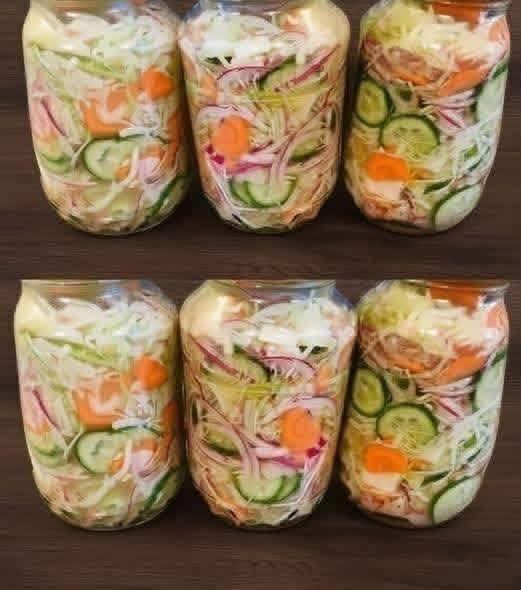
Homemade Pickled Vegetable Jars (Crispy, Tangy & Easy Refrigerator Pickles)
Homemade pickled vegetables are one of the simplest and most rewarding ways to preserve fresh produce while adding bold, tangy flavor. These pickled vegetable jars are crisp, colorful, and packed with a balance of acidity, saltiness, and subtle sweetness.
Unlike store-bought pickles, this homemade version allows you to control the ingredients, avoid preservatives, and customize flavors to your preference. Whether you’re serving them as a side dish, snack, or sandwich topping, these pickles add a refreshing crunch to any meal.
Ingredients
Mixed Vegetables (about 4–5 cups total)
Choose a variety for the best texture and color:
- 2 medium carrots, peeled and cut into sticks
- 1–2 cucumbers, sliced into rounds or spears
- 1 red or yellow bell pepper, sliced
- 1 small cauliflower, cut into bite-sized florets
- 1 small onion, thinly sliced
Optional Vegetables:
- Green beans
- Radishes
- Cabbage
- Zucchini
Pickling Brine
- 2 cups water
- 1 cup white vinegar (5% acidity recommended)
- 1 tablespoon salt (preferably non-iodized)
- 1 tablespoon sugar
Aromatics & Flavor Enhancers
- 3–5 garlic cloves (lightly crushed)
- 1 teaspoon black peppercorns
- 1 teaspoon mustard seeds
- 1–2 bay leaves
- Fresh dill, thyme, or parsley (optional)
Time Required
- Preparation: 15–20 minutes
- Brine heating: 5–7 minutes
- Cooling: 20–30 minutes
- Pickling time: minimum 24 hours
- Best flavor develops after: 2–3 days
Step-by-Step Instructions
Step 1: Prepare the Vegetables
Start by washing all vegetables thoroughly under cold water. Peel and cut them into evenly sized pieces to ensure consistent pickling.
For best results:
- Keep pieces slightly thick for extra crunch
- Avoid very thin slices, which can become soft quickly
Step 2: Sterilize the Jars
Use glass jars with airtight lids.
To sterilize:
- Pour boiling water into the jars and over the lids
- Let sit for 5 minutes
- Carefully drain and allow to air dry
This step helps extend shelf life and prevents unwanted bacteria.
Step 3: Prepare the Brine
In a medium saucepan, combine:
- Water
- Vinegar
- Salt
- Sugar
Bring the mixture to a gentle boil while stirring. Continue until the salt and sugar dissolve completely.
Remove from heat and allow it to cool slightly (warm—not boiling hot).
Step 4: Pack the Jars
Place garlic cloves, peppercorns, mustard seeds, bay leaves, and herbs at the bottom of each jar.
Then tightly pack the vegetables inside:
- Mix different colors for visual appeal
- Avoid crushing or overpacking
Step 5: Add the Brine
Carefully pour the warm brine over the vegetables until fully submerged.
Important:
- Ensure all vegetables are covered
- Leave about 1–2 cm (½ inch) space at the top
- Tap the jar gently to release trapped air bubbles
Seal the jars tightly.
Step 6: Cool and Refrigerate
Let the jars cool completely at room temperature.
Once cooled:
- Transfer to the refrigerator
- Let them pickle for at least 24 hours
For deeper flavor, wait 48–72 hours before consuming.
How to Use Pickled Vegetables
These pickles are incredibly versatile:
- Serve alongside grilled meats or roasted chicken
- Add to sandwiches, burgers, or wraps
- Chop into salads for extra crunch
- Enjoy as a healthy snack straight from the jar
- Pair with rice dishes or Mediterranean meals
Expert Tips for Perfect Pickles
- Use fresh, firm vegetables for maximum crunch
- Do not reduce the vinegar too much—it ensures proper preservation
- Keep vegetables submerged at all times
- Use non-iodized salt to avoid cloudy brine
- Taste and adjust sweetness or saltiness to your liking
Flavor Variations
Spicy Pickled Vegetables
Add:
- Chili flakes
- Whole chili peppers
Citrus Twist
Include:
- Lemon slices or peel for brightness
Garlic Lovers Version
Double the garlic for a bold, savory kick
Herb-Infused Pickles
Use:
- Dill (classic pickle flavor)
- Thyme or rosemary for depth
Moroccan-Inspired Pickles
Add:
- Cumin seeds
- Paprika
- A drizzle of olive oil after pickling
Storage & Shelf Life
- Store jars in the refrigerator
- Best consumed within 2 to 3 weeks
- Always use clean utensils to avoid contamination
Final Result
You’ll end up with crisp, vibrant, and tangy pickled vegetables that are bursting with flavor. Each bite delivers a satisfying crunch combined with a refreshing balance of acidity and seasoning.
Homemade pickles are not only easy to make but also a great way to elevate everyday meals with minimal effort.