
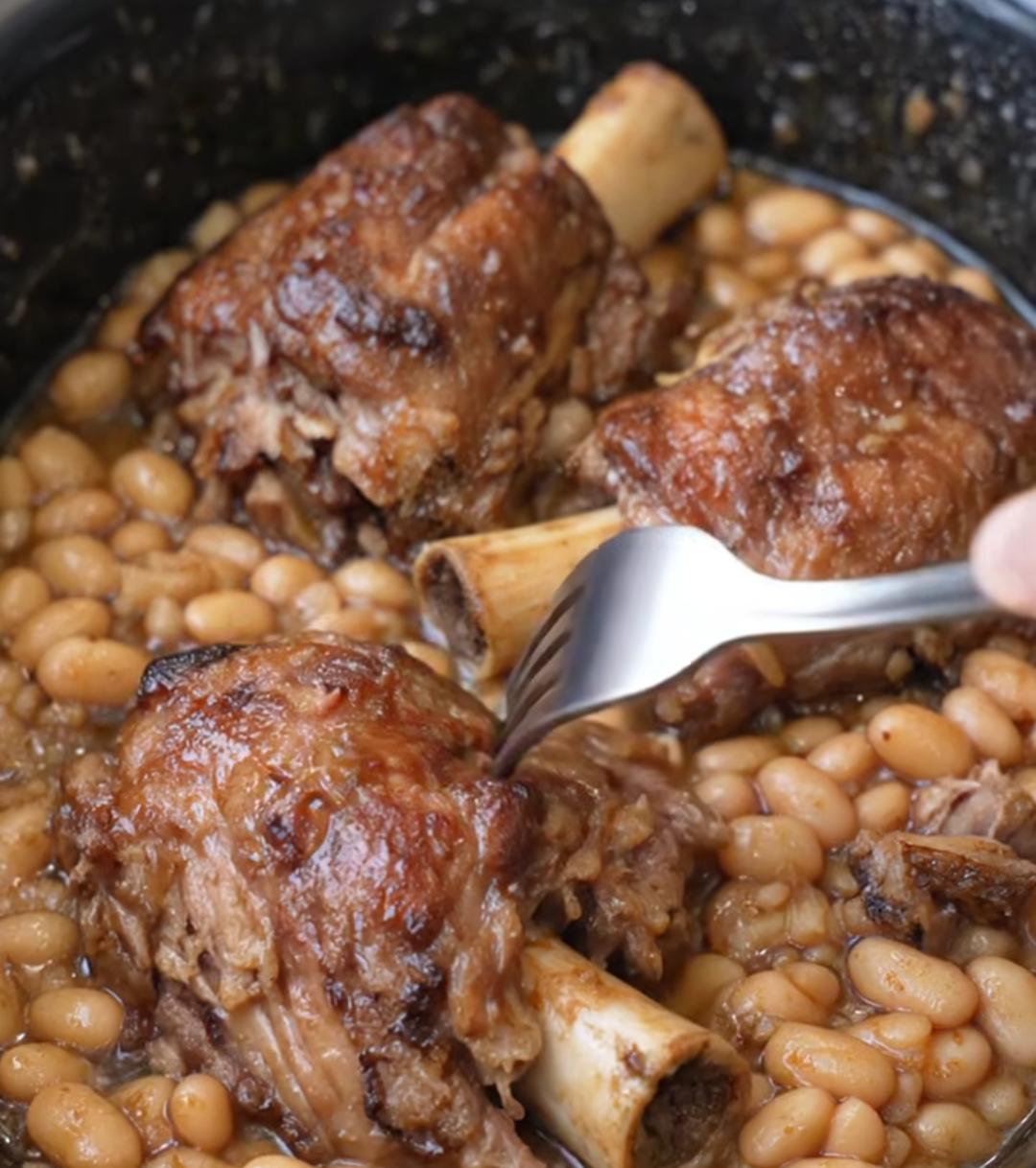
Slow Cooker Depression Era Pork Shanks and Navy Beans
Slow Cooker Depression Era Pork Shanks and Navy Beans (Detailed Recipe)
This is a classic “Depression Era” style comfort food recipe from the United States. During the Great Depression, families often relied on inexpensive cuts of meat like pork shanks and dried beans because they were cheap, filling, and could feed many people. Slow cooking was essential because it turned tough ingredients into something rich, tender, and flavorful.
This dish is all about simplicity, patience, and deep flavor developed over hours of slow simmering.
Ingredients (Serves 6–8 people)
Pork Shanks:
- 2 to 4 pork shanks (about 1.5–2 kg total)
- 2 teaspoons salt (adjust later)
- 1 teaspoon black pepper
- 1 teaspoon paprika (optional but recommended for depth)
- 1 large onion, sliced or chopped
- 3–5 cloves garlic, minced
- 1–2 bay leaves
- 1 tablespoon oil (for browning)
Beans:
- 2 cups dried navy beans
- Water (for soaking overnight)
- 6–8 cups chicken broth (or water + bouillon cubes)
Optional Vegetables (but highly recommended for flavor):
- 1–2 carrots, chopped
- 1 celery stalk, chopped
- 1 small tomato (optional, adds mild acidity)
- Seasoning Options (for extra depth):
- 1 teaspoon dried thyme
- 1 teaspoon cumin (optional, gives earthy warmth)
- 1 tablespoon apple cider vinegar or lemon juice (added at the end)
Step 1: Preparing the Beans (Very Important)
Dried navy beans need preparation before cooking:
- Rinse the beans thoroughly under cold water.
- Place them in a large bowl.
- Cover with plenty of water (at least 3–4 times the volume of beans).
- Let them soak for 8 to 12 hours overnight.
- The next day, drain and rinse them again.
Why soaking matters: Soaking reduces cooking time and makes beans easier to digest.
Step 2: Browning the Pork Shanks (Optional but highly recommended)
This step builds deep flavor:
- Heat a large pan over medium-high heat.
- Add a tablespoon of oil.
- Season pork shanks with salt, pepper, and paprika.
- Sear them on all sides until they develop a golden-brown crust (about 3–4 minutes per side).
This step is optional, but skipping it will result in a lighter, less rich flavor.
Step 3: Assembling Everything in the Slow Cooker
Now it’s time to build the dish:
Add the following to your slow cooker:
- Soaked and drained navy beans
- Chopped onions
- Garlic
- Carrots and celery (if using)
- Bay leaves
- Thyme, cumin, salt, pepper, paprika
- Pork shanks (browned or raw)
- Chicken broth (enough to fully cover everything)
Make sure everything is submerged so the beans cook evenly.
Step 4: Slow Cooking Process
Low setting (best option):
- Cook for 8 to 10 hours
High setting:
- Cook for 5 to 6 hours
During cooking:
- Do NOT open the lid frequently (it releases heat and slows cooking)
- Check once halfway if liquid is too low and add hot broth if needed
The pork is ready when it easily falls off the bone and the beans are soft but not mushy.
Step 5: Finishing Touches (Important for flavor balance)
Once cooking is done:
- Remove bay leaves.
- Taste the broth and adjust salt and pepper.
- Add 1 tablespoon apple cider vinegar or lemon juice.
This step is crucial — the acidity balances the richness of the pork and beans.
Step 6: Texture Adjustment (Optional)
If you want a thicker stew-like consistency:
- Mash a small portion of beans inside the pot
- Stir well and let it sit for 10–15 minutes
This naturally thickens the broth without flour or starch.
Serving Suggestions
Serve hot with:
- Crusty bread or toasted baguette
- White rice
- Cornbread (classic pairing in American Southern cooking)
Garnish with:
- Chopped fresh parsley
- A drizzle of olive oil (optional)
Storage
- Refrigerate leftovers for up to 4 days
- Freeze for up to 2–3 months
- Reheat slowly on the stove or microwave with a little added water/broth
Final Result
You get:
- Extremely tender pork that falls off the bone
- Creamy navy beans full of smoky, savory flavor
- A thick, hearty broth that tastes better the next day
- A true old-fashioned comfort food meal