
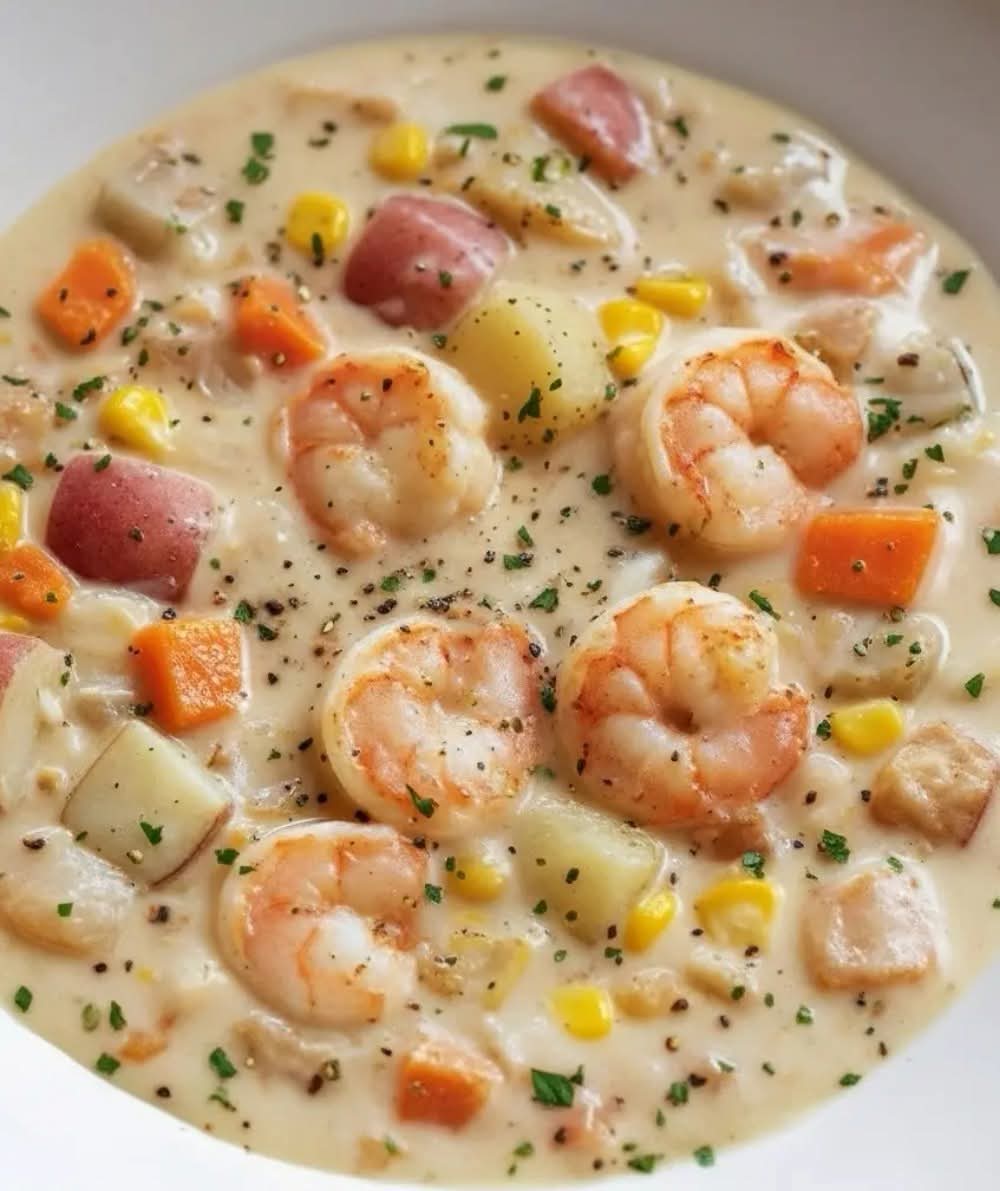
The Ultimate Seafood Chowder Recipe – Rich, Creamy, and Full of Coastal Flavor
Seafood Chowder is one of the most comforting and satisfying soups ever created. Rich, creamy, and loaded with fresh seafood, this classic coastal dish has been enjoyed for generations in fishing communities around the world. From New England kitchens to seaside restaurants, seafood chowder has earned its reputation as the perfect combination of rustic comfort food and elegant seafood dining. Every spoonful delivers creamy broth, tender potatoes, buttery vegetables, and delicate seafood flavors that instantly warm the soul.
What makes a truly great seafood chowder stand out is balance. The broth should be silky and luxurious without feeling overly heavy. The seafood must remain tender and sweet rather than overcooked and rubbery. The vegetables should soften enough to melt into the soup while still adding texture and depth. Potatoes play a particularly important role because they naturally release starch while cooking, helping create the chowder’s thick and hearty consistency without requiring excessive flour or thickeners.
Traditionally, chowder began as a practical fisherman’s meal made with the day’s fresh catch, potatoes, onions, and milk. Over time, the dish evolved into a beloved comfort food served in homes and seafood restaurants worldwide. Modern seafood chowder recipes often include a variety of seafood such as shrimp, scallops, white fish, clams, mussels, crab, or even lobster. The flexibility of the recipe is part of its charm — you can easily adapt it based on what seafood is fresh, affordable, or available in your kitchen.
This seafood chowder recipe combines classic techniques with rich homemade flavor, creating a restaurant-quality dish that is surprisingly easy to prepare. Whether you are cooking for a cozy family dinner, a holiday gathering, or simply craving a bowl of creamy seafood comfort, this recipe delivers incredible flavor every single time.
Why You Will Love This Seafood Chowder
There are countless reasons why seafood chowder continues to be one of the world’s favorite soup recipes. Here are just a few:
- Rich and creamy texture without becoming too heavy
- Packed with layers of seafood flavor
- Easy to customize with your favorite seafood
- Naturally thickened with potatoes
- Perfect for cold weather comfort meals
- Elegant enough for special occasions
- Simple ingredients with impressive results
- Restaurant-style flavor made easily at home
One of the best things about seafood chowder is how satisfying it feels. It’s hearty enough to serve as a complete meal, especially when paired with warm crusty bread or oyster crackers. The creamy broth coats every bite with deep savory flavor, while the seafood adds sweetness and freshness that keeps the dish balanced and light despite its richness.
Ingredients for Seafood Chowder
Chowder Base
- 2 tablespoons unsalted butter
- 1 tablespoon olive oil
- 1 large onion, finely chopped
- 2 celery stalks, diced
- 2 garlic cloves, minced
- 2 medium carrots, peeled and diced
- 3 medium potatoes, peeled and cubed
- 3 cups seafood stock or chicken broth
- 1 cup whole milk
- 1 cup heavy cream
- 1 teaspoon salt
- ½ teaspoon black pepper
- ½ teaspoon smoked paprika
- 1 teaspoon dried thyme
- 1 bay leaf
Seafood Selection
- 200g shrimp, peeled and deveined
- 200g firm white fish such as cod or haddock, cut into chunks
- 150g scallops
- 150g clams or mussels
- Optional: crab meat, lobster chunks, or salmon pieces
Optional Garnishes
- Fresh parsley, chopped
- Fresh chives
- Extra cracked black pepper
- Oyster crackers
- Toasted sourdough bread
Step-by-Step Instructions
Step 1: Prepare the Flavor Base
In a large heavy-bottomed pot or Dutch oven, melt the butter together with olive oil over medium heat. Once the butter begins to foam, add the chopped onions, celery, and carrots.
Cook the vegetables slowly for about 6–8 minutes, stirring occasionally, until they become soft and aromatic. This slow cooking process is essential because it builds the deep savory foundation of the chowder. The onions should become translucent but not browned.
Add the minced garlic and cook for another minute until fragrant. Garlic burns quickly, so avoid cooking it too long.
At this stage, your kitchen will already smell rich, buttery, and comforting.
Step 2: Add the Potatoes and Broth
Add the cubed potatoes directly into the pot along with the seafood stock or chicken broth. Stir in the thyme, paprika, salt, pepper, and bay leaf.
Bring the mixture to a gentle boil, then reduce the heat and let it simmer uncovered for 15–20 minutes. During this time, the potatoes soften and release starch into the broth, naturally thickening the chowder.
The potatoes are one of the most important ingredients because they create the hearty texture seafood chowder is known for. Some people even mash a few potato pieces into the broth for an extra creamy consistency.
Step 3: Add Milk and Cream
Once the potatoes are fork-tender, reduce the heat to low and slowly pour in the milk and heavy cream while stirring gently.
Heating the dairy slowly is extremely important. Boiling cream too aggressively can cause it to separate or become grainy. Low heat helps create a smooth, velvety texture that gives chowder its signature richness.
At this stage, the soup transforms from a simple broth into a luxurious creamy chowder.
Step 4: Cook the Seafood
Seafood cooks very quickly, which means timing is everything.
First, add the chunks of white fish because they require slightly more cooking time. Let them simmer gently for about 2 minutes.
Next, add the shrimp, scallops, and clams or mussels. Continue cooking for another 4–5 minutes until:
- The shrimp turn pink
- The fish flakes easily
- The scallops become tender
- The shellfish open completely
Do not overcook the seafood. Overcooked seafood becomes rubbery and loses its delicate sweetness.
If using crab meat or lobster, add it during the final minute just to warm through.
Step 5: Final Seasoning and Garnish
Taste the chowder and adjust the seasoning if needed. Add more salt, pepper, or paprika depending on your preference.
Remove the bay leaf before serving.
Ladle the hot chowder into bowls and garnish with fresh parsley, chives, cracked black pepper, or oyster crackers.
Serve immediately with warm crusty bread for the ultimate comforting seafood meal.
Secrets to the Best Seafood Chowder
Use Fresh Seafood Whenever Possible
Fresh seafood gives the chowder its best flavor and texture. However, frozen seafood can also work beautifully if thawed properly before cooking.
Avoid Overcooking
This is the most important rule when making chowder. Seafood only needs a few minutes to cook. Gentle simmering keeps it tender and juicy.
Choose the Right Potatoes
Yukon Gold potatoes are excellent because they become creamy while still holding shape. Russet potatoes also work well for a thicker chowder.
Add White Wine for Extra Depth
A small splash of dry white wine added before the broth creates incredible restaurant-style flavor.
Let the Chowder Rest Briefly
Allowing the chowder to sit for 5 minutes before serving helps the flavors blend together even more.
Best Seafood Options for Chowder
One of the reasons seafood chowder is so popular is its versatility. You can create different flavor combinations depending on the seafood you use.
Excellent seafood choices include:
- Shrimp
- Cod
- Haddock
- Salmon
- Sea bass
- Scallops
- Mussels
- Clams
- Crab
- Lobster
- Calamari
Combining multiple types of seafood creates more depth and complexity in the final dish.
What to Serve with Seafood Chowder
Seafood chowder pairs beautifully with simple side dishes that complement its creamy richness.
Popular serving ideas include:
- Crusty artisan bread
- Garlic toast
- Oyster crackers
- Cornbread
- Caesar salad
- Roasted vegetables
- Grilled asparagus
- Fresh lemon wedges
A slice of warm sourdough bread dipped into creamy chowder is one of the most comforting food experiences imaginable.
How to Store Seafood Chowder
Store leftover seafood chowder in an airtight container in the refrigerator for up to 2 days.
When reheating:
- Use low heat
- Stir gently
- Avoid boiling
Boiling can overcook the seafood and cause the cream to separate.
Can You Freeze Seafood Chowder?
Yes, although cream-based soups sometimes change texture slightly after freezing.
For best results:
- Cool completely before freezing
- Freeze in airtight containers
- Use within 1 month
- Reheat slowly over low heat
Some people prefer freezing the chowder before adding cream, then adding fresh cream during reheating.
Frequently Asked Questions
Can I Make Seafood Chowder Without Cream?
Absolutely. You can substitute cream with milk, evaporated milk, or even coconut milk for a lighter version.
Is Seafood Chowder Healthy?
Seafood chowder contains protein, vitamins, minerals, and healthy seafood nutrients. Using lighter dairy can reduce calories while still maintaining flavor.
Which Fish Is Best for Chowder?
Firm white fish such as cod, haddock, halibut, or sea bass works best because it holds together while cooking.
How Do I Naturally Thicken Chowder?
Potatoes naturally release starch into the broth, creating thickness without needing much flour.
Can I Make It Spicy?
Yes. Add cayenne pepper, chili flakes, or hot sauce for a spicy seafood chowder variation.
Final Thoughts
Seafood Chowder is the perfect example of how simple ingredients can create extraordinary comfort food. Creamy broth, tender seafood, soft potatoes, and aromatic vegetables come together in one deeply satisfying dish that feels both rustic and luxurious.
Whether served during a cold winter evening, a family gathering, or a special seafood dinner, this chowder always delivers warmth, richness, and unforgettable flavor. The combination of fresh seafood and creamy savory broth creates a meal that is timeless, comforting, and universally loved.
Once you master this seafood chowder recipe, it will quickly become one of your favorite homemade soups — rich, hearty, elegant, and filled with the delicious taste of the sea.