
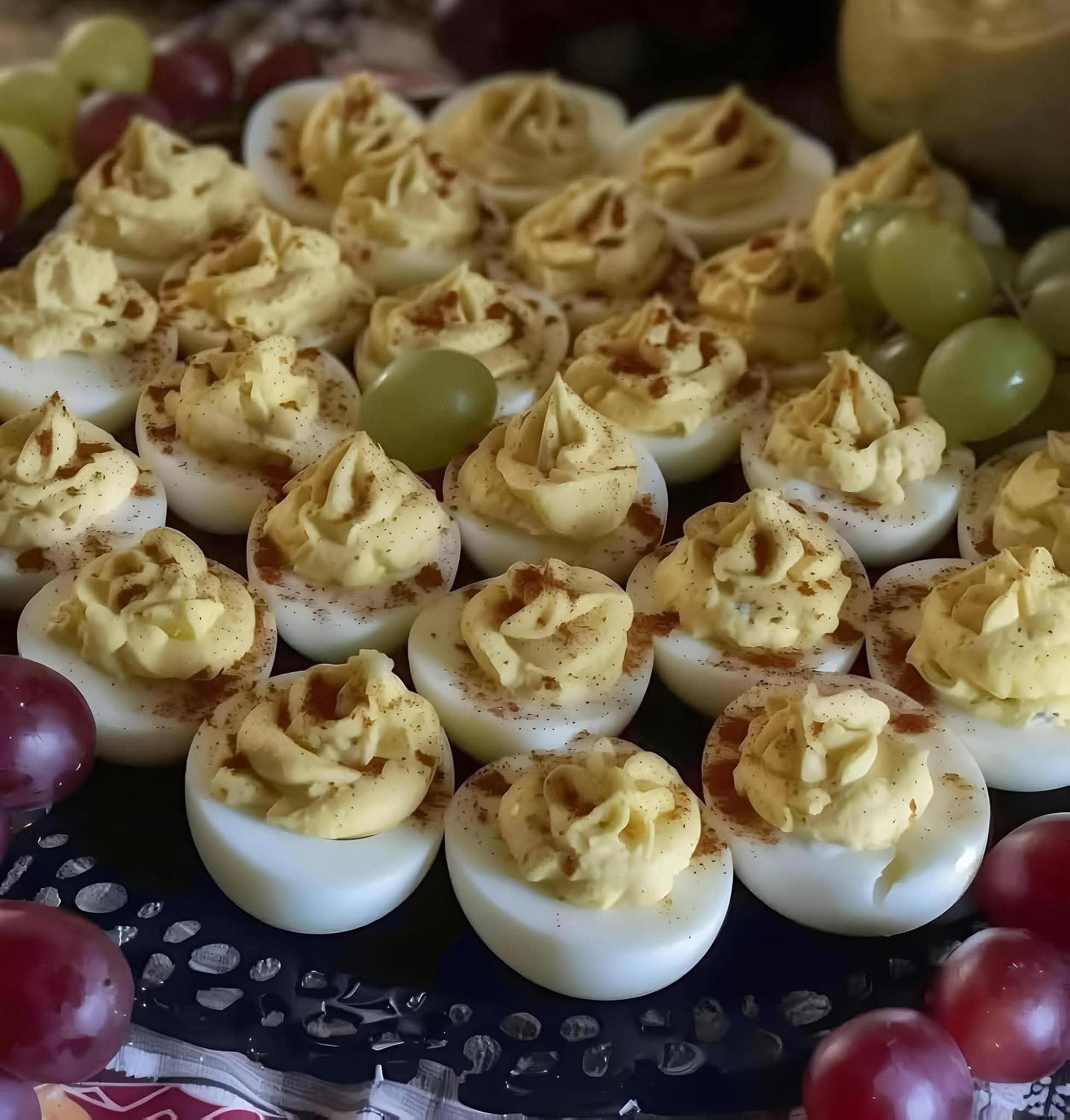
Why People Still Eat Deviled Eggs in 2026
Deviled eggs are one of those culinary classics that somehow manages to exist in two worlds at once: they’re nostalgic and retro, reminding many people of family gatherings, church potlucks, and holiday dinners, but they’ve also found new life in modern cuisine thanks to creative twists, gourmet ingredients, and social media food culture.
What Exactly Are Deviled Eggs?
At their core, deviled eggs are simple: hard-boiled eggs, sliced in half, with the yolks removed, mashed, and mixed with a creamy, flavorful filling. That filling is usually a combination of mayonnaise, sour cream, mustard, lemon juice, and spices. The mixture is then spooned or piped back into the egg whites. The result is a bite-sized snack that’s simultaneously rich, tangy, creamy, and satisfying.
Breaking Down the Ingredients
Here’s why each ingredient in your recipe matters:
- Eggs (14 hard-cooked): Eggs are the foundation. A perfectly hard-cooked egg has firm whites and a yolk that’s rich but not chalky. Overcooking can make the yolk turn greenish and develop a slightly sulfuric taste.
- Mayonnaise (1/2 cup): This adds creaminess and smooth texture. It’s the backbone of most traditional deviled egg recipes.
- Sour Cream (1/2 cup): Adds tanginess that balances the richness of the mayonnaise. It also gives a silky mouthfeel that makes the filling feel lighter.
- Dijon Mustard (1 1/2 teaspoons): Provides a subtle heat and complexity. Dijon has a sharper, more refined flavor than classic yellow mustard, which elevates the taste.
- Lemon Juice (1 teaspoon): Adds acidity, which brightens the flavor and prevents the filling from tasting too heavy.
- Black Pepper (1/4 teaspoon): Simple but necessary. Pepper enhances the other flavors and adds a tiny bit of kick.
Optional garnishes like paprika, chives, bacon bits, or even smoked salmon can turn an ordinary deviled egg into something elegant and visually striking.
Step-by-Step Preparation
- Boil the Eggs: Place the eggs in a single layer in a pot, cover them with cold water, and bring to a boil. Once boiling, cover the pot, turn off the heat, and let the eggs sit for 10–12 minutes. Then transfer them to an ice bath to cool completely.
- Peel and Slice: Carefully peel the eggs and slice them in half lengthwise. Remove the yolks and place them in a mixing bowl.
- Make the Filling: Mash the yolks with a fork, then mix in mayonnaise, sour cream, Dijon mustard, lemon juice, and black pepper until smooth. Taste and adjust seasonings as needed.
- Fill the Egg Whites: Use a spoon or piping bag to place the yolk mixture into the egg white halves. Neatness is optional, but it makes them look more appealing.
- Garnish and Serve: Sprinkle with paprika, herbs, or other toppings. Chill until ready to serve.
Why Deviled Eggs Are Still Popular
Despite being considered “retro,” deviled eggs have never really gone out of style. They’re versatile, portable, and customizable. You can stick to the classic recipe, or make them trendy with additions like truffle oil, sriracha, avocado, smoked salmon, or pickled vegetables. They work at casual get-togethers, formal dinners, and everything in between.
Another reason they remain popular is the nostalgia factor. For many, deviled eggs are tied to childhood memories and family traditions. They’re small, indulgent, and shareable, which makes them perfect for social gatherings.
Fun Historical Note
The term “deviled” originally referred to spicy or zesty food, not eggs specifically. In the 18th century, it was common to “devil” meat with mustard, pepper, or other seasonings. So when you eat a deviled egg today, you’re actually partaking in a centuries-old culinary tradition.
So, yes—people definitely still eat deviled eggs! They’re loved by both purists who cherish the classic version and foodies who experiment with modern twists. Whether at a picnic, holiday table, or trendy brunch spot, deviled eggs remain a beloved little bite of history, flavor, and comfort.