
Amish Friendship Bread Starter (Complete 10-Day Guide)
Amish Friendship Bread Starter is a sweet, fermented batter used to make a soft, cinnamon-style quick bread. The tradition is simple and heartwarming: you nurture the starter for 10 days, divide it, keep one portion for yourself, and share the rest with friends—along with the recipe.
Below you’ll find a detailed, step-by-step guide, plus tips, troubleshooting, storage advice, and FAQs to help you get perfect results.
Ingredients
- 1/4 cup warm water (about 100–110°F / 38–43°C)
- 1 package (2 1/4 teaspoons) active dry yeast
- 1 cup all-purpose flour
- 1 cup granulated sugar
- 1 cup milk (room temperature)
Equipment Needed
- Large non-metal mixing bowl (glass or plastic)
- Wooden or plastic spoon
- 1-gallon zip-top plastic bag
- Measuring cups
- Clean kitchen towel or plastic wrap
Avoid metal bowls or utensils during fermentation. The yeast can react with metal and affect the flavor and activity of the starter.
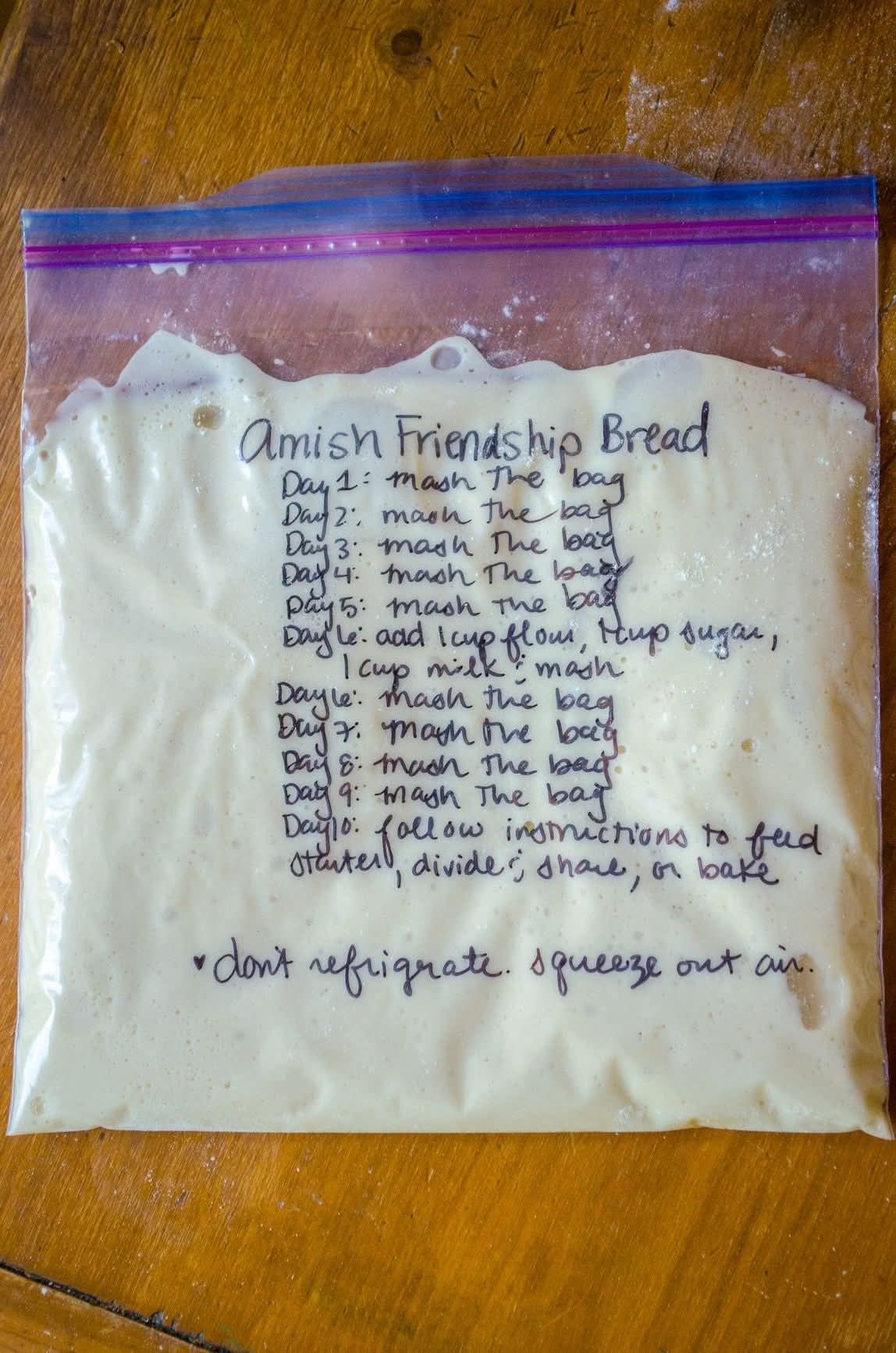
10-Day Amish Friendship Bread Starter Schedule
Day 1 – Create the Starter
- In a small bowl, dissolve the yeast in warm water.
Let it sit for 5–10 minutes until foamy and bubbly.
(If it doesn’t bubble, your yeast may be inactive.) - In a large non-metal bowl, mix flour and sugar.
- Stir in the milk and the yeast mixture.
- Mix well until smooth. Do not overmix.
- Cover loosely with plastic wrap or a clean towel and let sit at room temperature until bubbly.
- Pour mixture into a 1-gallon zip-top bag, seal it loosely, and leave at room temperature.
Day 2 – Mash the Bag
Gently squeeze (mash) the bag to mix the contents.
Day 3 – Mash the Bag
Mash again to redistribute ingredients and release air.
Day 4 – Mash the Bag
Continue gently squeezing the bag.
Day 5 – Mash the Bag
Repeat the mixing process by squeezing the bag.
Day 6 – Feed the Starter
Open the bag and add:
- 1 cup flour
- 1 cup sugar
- 1 cup milk
Seal and mash thoroughly until well combined.
This feeding step strengthens the yeast and helps it grow.
Day 7 – Mash the Bag
Gently mix by squeezing.
Day 8 – Mash the Bag
Mash again.
Day 9 – Mash the Bag
Mash once more.
Day 10 – Divide & Share
- Pour starter into a large non-metal bowl.
- Add:
- 1 cup flour
- 1 cup sugar
- 1 cup milk
- Stir well.
- Measure out 1 cup portions into separate 1-gallon zip-top bags.
- Keep one bag for yourself to bake with.
- Share the remaining bags with friends—along with these instructions.
Traditionally, you bake your own Amish Friendship Bread on Day 10 using one cup of the starter.
Storage & Care
- Keep starter at room temperature (68–75°F / 20–24°C).
- Do not refrigerate before Day 10.
- Release excess air from the bag if it becomes too inflated.
- If you need to delay baking, you may refrigerate after Day 10.
How to Know It’s Working
A healthy starter should:
- Produce bubbles
- Slightly expand in the bag
- Have a sweet, yeasty smell
- Look creamy and smooth
Discard if:
- It smells rotten or moldy
- You see visible mold
- It turns unusual colors (green, black, pink)
Can You Freeze the Starter?
Yes! After Day 10, you can freeze 1-cup portions for up to 2–3 months.
To use, thaw at room temperature and resume the feeding cycle.
What Do You Make With It?
The starter is typically used for:
- Cinnamon Amish Friendship Bread
- Banana bread variations
- Chocolate chip bread
- Muffins
- Coffee cake
- Pancakes
It creates a moist, tender texture thanks to natural fermentation.
Frequently Asked Questions
Can I use instant yeast instead of active dry yeast?
Yes, but active dry yeast is traditional and recommended.
Can I use almond or oat milk?
Yes, though dairy milk produces the richest flavor.
What if I forget to mash one day?
It’s usually fine. Just resume the schedule the next day.
Why does it grow so much?
The yeast produces carbon dioxide during fermentation, causing expansion.
Is this like sourdough?
Similar concept, but Amish Friendship Bread Starter is sweeter and milder.
The Tradition Behind It
Amish Friendship Bread is about community and generosity. The act of sharing starter symbolizes kindness and connection. Each batch continues the cycle, spreading warmth from kitchen to kitchen.